Backend Development
We build the secure, reliable server-side systems behind websites, apps and platforms, handling business logic, data, authentication and performance out of sight.
We design and build secure, well-documented APIs and connect the systems your business relies on, so data moves automatically between your website, apps and tools.
API development and integration is the work of building the interfaces that let software systems talk to each other, and of connecting existing systems so they share information automatically. Most businesses use many tools: a website, an online store, a CRM, accounting software, email platforms, payment providers and more. When these tools do not connect, staff copy data between them by hand, mistakes creep in and nobody has a complete picture. At TechBiz Digital, we design APIs and integrations that keep data accurate and flowing where it needs to go.
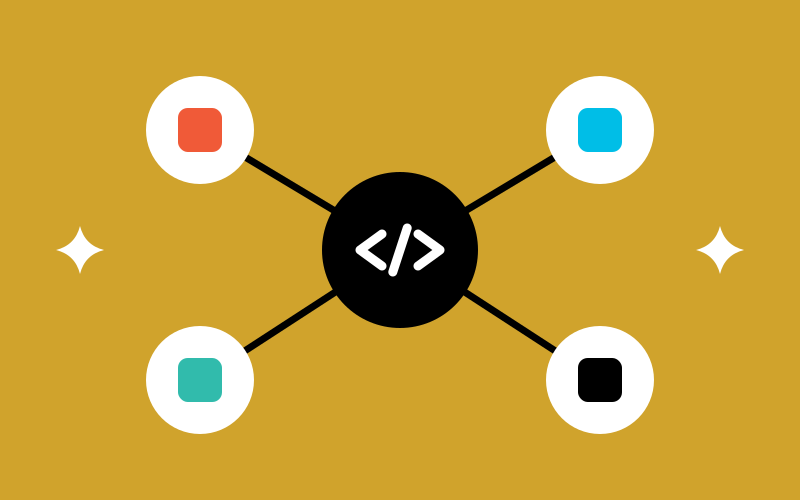
The service has two sides. API development creates new interfaces for your own systems, so apps, partners or other platforms can use them. Integration connects existing systems, using their APIs, to automate the movement of data and actions between them.
sending orders, stock levels and customer details between an online store and inventory, warehouse or accounting systems.
passing website enquiries into a CRM and syncing contacts with email marketing platforms.
connecting payment providers, billing systems and accounting software.
APIs that give iOS and Android apps secure access to accounts, content and transactions.
APIs that let partners place orders, check availability or retrieve data from your platform.
bringing information from several systems into one database or reporting tool.
a map of your systems, the data that must move between them, how often and in which direction.
clear, consistent endpoints and data structures, typically using REST or GraphQL depending on the use case.
secure access using API keys, OAuth or other appropriate methods, with permissions limited to what each consumer needs.
connections between your systems, including data mapping, transformation and validation.
real-time updates triggered when something changes, rather than relying only on scheduled checks.
retries, logging and safeguards that prevent duplicate or lost records.
visibility of integration health, with notifications when something needs attention.
guides for developers and partners covering endpoints, authentication and examples.
a plan for changing the API without breaking existing users.
We review each system involved, its API capabilities and limits, and how data currently moves between them day to day.
We define which fields map between systems, how conflicts are resolved and which system is the source of truth for each record.
We develop the API or integration in a test environment, using sample data to verify every scenario, including failures and edge cases.
We release carefully, often starting with a limited data set or parallel running, and confirm the results before the full go-live.
We monitor the integration, respond to errors and update it as the connected systems change their APIs over time.
Integration removes repetitive work. When an order, enquiry or payment moves automatically to every system that needs it, your team stops copying data and can focus on customers. Automated data transfer is also more accurate, which reduces costly errors in stock, invoicing or customer records.
Connected systems give better visibility. When information is consistent across tools, reports can be trusted and decisions are based on a complete picture. A well-designed API also opens new opportunities, such as mobile apps, partner channels and integrations your own customers can use.
Integrations depend on other companies' software, which changes. Providers update their APIs, retire old versions and adjust limits, sometimes with short notice. An integration that worked perfectly at launch can fail quietly months later. We build with this in mind, using supported API versions, monitoring for errors and keeping documentation that makes updates straightforward. Ongoing maintenance means changes from third parties are handled before they disrupt your operations.
APIs sit at the centre of modern software. Our backend development and database design and development services build the systems behind them, and custom software development uses integrations to bring disconnected tools together. For automating processes across connected tools, see AI agents and automation. Explore all of our development services.
Frequently Asked Questions
An API, or application programming interface, is a defined way for software systems to communicate. It lets one system request data or trigger actions in another, such as a website sending an order to an accounting system or an app retrieving a customer's account details.
Often, yes. If both systems offer APIs, we can build a custom integration between them. If a system has no API, alternatives such as file exchanges, database connections or middleware may be possible. We assess the options during discovery.
You may need one if mobile apps, partners or other systems need to access your data or services, or if you plan to offer integrations to your own customers. We help you decide what the API should expose and how it should be secured.
Both are valid approaches. REST is widely understood and suits many integrations, while GraphQL can help when clients need flexible access to related data. We recommend the approach that fits your use case and the developers who will use the API.
We build integrations to handle failure gracefully, with retries, error logging, alerts and safeguards against duplicate records. Monitoring means problems are noticed quickly, often before anyone on your team is affected.
Yes. We provide clear documentation covering endpoints, authentication, request and response formats and error handling, so your developers and partners can use the API confidently.
API integration connects separate software systems so they can exchange data automatically, for example sending website orders to an accounting system or syncing customers with a CRM. It removes manual re-entry and keeps information consistent across tools.
It depends on the systems involved, the quality of their APIs and documentation, and how much data mapping and error handling are needed. A simple connection is much quicker than a multi-system integration. We confirm timings after reviewing the systems.
We use authentication and authorisation so only permitted systems and users can access data, encrypt traffic, validate inputs, limit request rates where appropriate and log activity, so problems can be detected and investigated.
It depends on the number of endpoints or integrations, the complexity of the data and business rules, and requirements for security, monitoring and documentation. We provide a proposal once we understand the systems involved.
Keep Exploring
More development services from TechBiz Digital, starting with those that work best alongside API Development & Integration.
We build the secure, reliable server-side systems behind websites, apps and platforms, handling business logic, data, authentication and performance out of sight.
We design and build software around the way your business actually works, automating manual processes, connecting disconnected tools and giving teams one reliable system.
We help businesses choose the right e-commerce platform and build online stores that handle products, payments, shipping and integrations reliably as sales grow.
We design and build automated workflows and AI agents that carry out multi-step tasks across your business tools, with clear permissions, approval steps and a record of every action.
We design and build databases that keep business data accurate, fast and secure, from new data models to migrations, performance tuning and reliable backup strategies.
We build fast, secure and accessible business websites on the platform that suits you, with content management your team can use and foundations ready for search.
We build custom WordPress websites that are fast, secure and easy to manage, with tailored themes, editor-friendly blocks and only the plugins your site genuinely needs.
We build and customise Shopify stores that reflect your brand, are simple to manage and connect to the apps and systems your business runs on.
We build fast, focused landing pages for campaigns and launches, with clear messaging, reliable forms and accurate tracking so you can measure every enquiry.
We build secure, browser-based applications such as portals, dashboards and booking systems, designed around your workflows and ready to grow with your business.
We build progressive web apps that install from the browser, load quickly, keep working on poor connections and give users an app-like experience from a single codebase.
We plan, build and launch mobile apps for iOS and Android, choosing native or cross-platform development based on what your product and users genuinely need.
We build iPhone and iPad apps that feel at home on Apple devices, with the development approach chosen after a technical assessment and every release prepared carefully for App Store review.
We build Android apps that run reliably across the wide range of Android devices, with the development approach chosen after a technical assessment and releases prepared for Google Play.
We help founders and businesses build software-as-a-service products, from a focused first version to a secure, scalable platform with subscriptions and customer accounts.
We build practical AI applications and features, from document search and summarisation to content and classification tools, designed with evaluation, privacy and human oversight.
We build AI chatbots for your website and messaging channels that answer questions from your approved content, capture enquiries and hand over to your team when a person is needed.
We set up and manage the cloud infrastructure behind websites and applications, with automated releases, monitoring, backups and security that keep everything running reliably.
We keep websites secure, fast and up to date with regular updates, backups, monitoring, fixes and content changes, so your site keeps working while you run your business.